
Policy Snapshot – Battery Booster Strategy
21 April 2026

On 16 December, the European Commission announced the Battery Booster Strategy within the Automotive package to support European cell manufacturing through €1.5 billion in interest-free loans through Innovation Fund, complemented by an additional €300 million to improve access to raw materials.
EXECUTIVE SUMMARY
On 16 December, the European Commission announced the Battery Booster Strategy within the Automotive package to support European cell manufacturing through €1.5 billion in interest-free loans through Innovation Fund, complemented by an additional €300 million to improve access to raw materials.
The Commission is making a new business case for manufacturing batteries in Europe, from securing raw materials to scaling production, ensuring offtake and a level playing field, and contributing to derisking from dominant global market players.
The strategy builds on previous initiatives such as the Batteries Regulation, the Net-Zero Industry Act, the Automotive Action Plan, and input from industry and key stakeholders gathered during the Strategic Dialogue on the Future of the Automotive Industry since January 2025.
The Battery Booster Strategy is structured on 6 pillars:
- Supporting the ramp up of EU manufacturers through financial backing
- Developing a resilient upstream value chain for access to raw materials and inputs
- Ensuring value added investments and industrial level playing field in the EU
- Supporting ‘made in EU’ offtakes, boosting resilience and sustainability
- Boosting research, innovation and skills for the EU battery value chain
- Coordinating action to maximise impact across Europe
The Commission aims at launching the call for proposals in the first quarter of 2026 with the funds aimed at reaching selected companies in 2026.
OVERVIEW
Pillar I – Supporting the ramp up of EU manufacturers through financial backing
| Main challenge
|
The need to support battery production in the EU in response to intense international competition and the structural difficulties faced by the industry in scaling up manufacturing.
|
| Previous funding from the EU
|
Dec 2024: €1 billion in grants to support EV cell manufacturing projects under the Innovation Fund. InvestEU top-up of €200 million (in the form of guarantees for loans) from the Innovation Fund to support innovative projects along the European battery manufacturing value chain1. |
| New funds under the Battery Booster | €1.5 billion from the Innovation Fund in the form of interest-free loans. This funding aims to support manufacturing ramp-up ahead of the next EU budget period, which is expected to introduce the ECF.
|
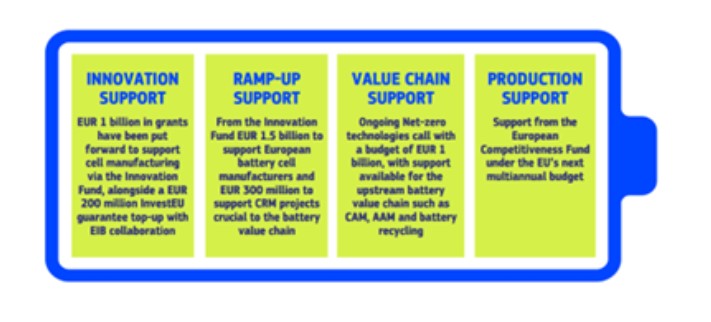
Figure 2. Financial support in Pillar I.
Pillar II – Developing a resilient upstream value chain for access to raw materials and inputs
| Main challenge
|
Geopolitical tensions and reliance on a limited number of non-EU suppliers expose the EU to supply disruptions, price volatility and strategic dependencies.
|
| CRMA
|
Strategic projects: 32 within the EU focused on battery raw materials, and 10 outside the EU. These projects will be eligible for simplified permitting and coordinated funding.
|
| RESource EU Action Plan
|
€3 billion in 2026 to provide direct support to the CRM value chain.
|
| InvestEU
|
€2 billion in 2026-2027 dedicated to CRM-related investment.
|
| New funds under the Battery Booster | €300 million to develop the upstream battery value chain, supporting project promoters in battery critical raw materials.
|
Pillar III – Ensuring value added investments and industrial level playing field in the EU
| Main challenge
|
The absence of a level playing field for trade and investment, resulting in increased imports linked to unfair competition.
|
| New conditions for foreign investment
|
Projects in strategic segments should comply with a set of conditions including governance, limits on foreign ownership, technology transfer, research and development commitments, workforce development, supply-chain integration. |
|
Building strategic partnerships to boost the resilience of our supply chain
|
De-risking and diversifying supply chains through cooperation with international partner countries to strengthen the EU’s manufacturing capacity.
|
Pillar IV – Supporting ‘made in EU’ offtakes, boosting resilience and sustainability
| Main challenge
|
The need to boost demand through the development of a resilient European battery value chain.
|
| IAA
|
The Commission will propose EU content requirements for batteries and their components to ensure that public funding supports EU manufacturing and employment. This aims to help EU battery manufacturers scale up, flatten the steep industrial learning curve, and attempt private capital to the most strategic segments of the value chain.
|
| Complementing the NZIA
|
Resilience criteria to be included in all MSs electric vehicle subsidy schemes as of Jan 2026.
|
Pillar V – Boosting research, innovation and skills for the EU battery value chain
‘’The EU has developed and strengthened its battery R&D ecosystem for many years, but we need to accelerate and scale it up.’’
| Main challenge
|
The EU ensure that its battery ecosystem grows, keeps pace with global technological advances, and remains at the forefront of battery technologies.
|
| Horizon Europe BATT4EU
|
€925 million over the period 2021-2027, leveraging more than €3 of private investment for every euro of public funding.
Support through Horizon Europe the development of new battery concepts and materials and cell manufacturing technologies along with a full European battery value chain.
|
| EIC Accelerator | In 2026, it will support startups and SMEs developing advanced materials for energy storage through a dedicated call.
|
|
Aligning public and private research initiatives
|
Under the SET Plan – now anchored in the NZIA – the implementation Working Group on Battery Technologies (led by MSs with the EC, and supported by the private sector and academia) will deliver a common investment and implementation plan in 2026. The plan will focus on next-gen high-performance battery chemistries (e.g. defence applications), addressing gaps in early-offtake and low-volume production lines.
|
Pillar VI – Coordinating action to maximise impact across Europe
‘’The European battery value chain is at a turning point. Time is of essence.’’
| Main challenge
|
The need for coordinated support and implementation across the European battery ecosystem.
|
| Competitiveness Coordination Tool
|
A mechanism to coordinate action at European and national level and ensure coherence across MSs shared competitiveness priorities.
|
| A CCT pilot for the battery sector |
|
EESC OPINION
- Strengthen the Battery Booster Strategy: Define clear priorities, deploy robust tools, and support the full battery value chain beyond EV batteries.
- Invest in the EU battery ecosystem: Boost EU and national funding, including in the next long-term budget, backed by a credible long-term financing plan.
- Develop the full ecosystem: Support giga-factories, SMEs, suppliers, and recyclers, while promoting innovation and quality jobs aligned with the European Pillar of Social Rights.
- Fund research and innovation: Prioritize pilot and first-of-a-kind production lines, critical chemicals, EU-made machinery, and new chemistries such as sodium batteries.
- Ensure “Made in Europe” quality: Enforce high product standards, social and environmental compliance, and fair rules for all products sold in the EU.
- Encourage technology transfer: Leverage state aid and public procurement to boost local content, knowledge sharing, and develop European industrial expertise.
- Expand recycling and circularity: Increase dismantling and recycling capacity, harmonise collection systems, and implement economically viable recycling policies.
- Harmonise EU safety standards: Standardize battery material safety and procurement rules to reduce fragmentation and support efficient manufacturing.
- Protect workers and health: Strengthen occupational safety, provide training, clarify hazardous material rules, conduct inspections, and reinforce social dialogue.
